

WhatsApp has become an essential communication tool for millions of people worldwide. The app is not only used for text messages but also for photos, videos, audio files, documents, and other important content.
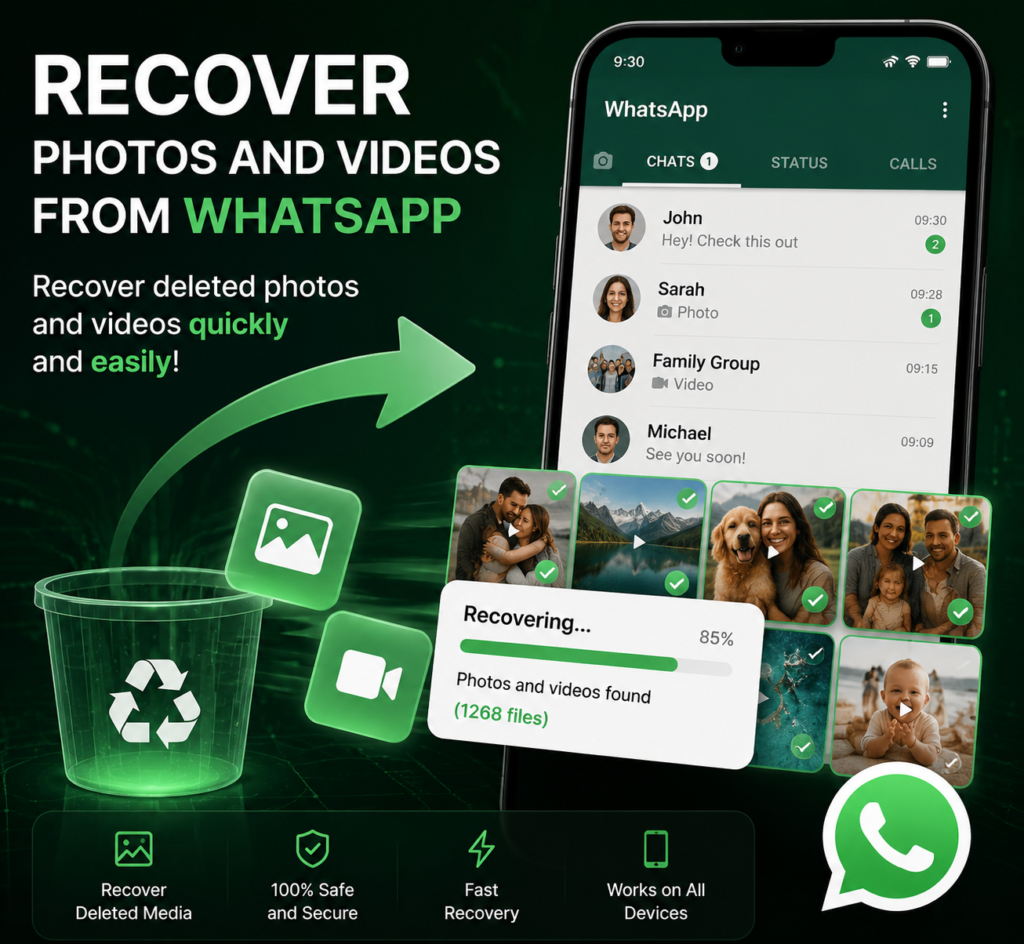
When something is accidentally deleted—whether a message, photo, or video—the feeling of loss can be immediate, especially if the content contains valuable information or memories you want to preserve.In recent years, thousands of users have turned to free and effective apps to recover deleted WhatsApp messages, photos, and videos. These apps work by accessing backups, notification histories, or temporary files stored on your device, allowing users to restore content with impressive accuracy. However, it is essential to understand how these apps work, their limitations, and security precautions before installing them.
In this article, you will learn how to recover deleted messages, photos, and videos from WhatsApp, discover the most effective free apps, understand advanced recovery methods, explore backup strategies, and discover ways to prevent future data loss. We will also cover digital security, recovery limitations, and practical tips to maximize success.
Why WhatsApp Messages and Files Are Deleted
WhatsApp messages and media can be deleted for several reasons:
- Accidental deletion by the user
- Messages deleted by the sender for everyone
- System glitches or errors during app updates
- Automatic storage cleanup on the device
- Device reset or phone change without backup
- Media not downloaded before being deleted by the sender
- Insufficient storage space leading to automatic removal of temporary files
Understanding why files are deleted helps determine the most effective recovery method, as factors like deletion time and file type influence success.
How Free Recovery Apps Work
Free WhatsApp recovery apps typically operate in three main ways:
- Local or cloud backup access – Restores conversations, photos, and videos from backups stored on Google Drive (Android) or iCloud (iOS).
- Notification or log recording – Some apps track notifications received on the device and can recover recently deleted messages.
- Temporary file recovery – Scans internal storage for images, videos, and audio still present, even if the conversation was deleted.
Recovery success depends on time since deletion, file type, granted permissions, and backup availability.
Table 1: File Types and Recovery Methods
| File Type | Recovery Method | Expected Accuracy | Notes |
|---|---|---|---|
| Text messages | Backup or notifications | High | Fast and usually complete recovery |
| Photos | Backup, media app, or internal storage | Medium to high | Depends on download and device cache |
| Videos | Backup or specialized app | Medium | Large or very old videos may not recover |
| Audio | Backup or notifications | Medium | Parts may be lost if no backup exists |
Free and Effective Recovery Apps
- WAMR – Logs notifications to recover messages, photos, videos, audios, and stickers recently deleted. Works best on Android.
- Notification History – Creates a history of app notifications, allowing recovery of short text messages.
- DiskDigger Photo Recovery – Specialized in recovering deleted photos and videos from device storage.
- iMyFone D-Back (Trial) – For iOS, recovers messages and media from iCloud or local backups.
Always choose apps that are well-rated, reputable, and available on official stores.
Basic Step-by-Step Recovery Process
- Download and install a trusted app.
- Grant necessary permissions for notifications, storage, or backups.
- Select the types of files to recover: messages, photos, videos, or audio.
- Start the scanning or restoration process.
- Preview and save the recovered content.
Following instructions carefully greatly improves recovery accuracy.
Advanced Tips to Maximize Recovery
- Act quickly after deletion; the sooner you try, the higher the success rate.
- Avoid using WhatsApp or installing other apps before attempting recovery to prevent overwriting temporary data.
- Maintain daily backups, both in the cloud and locally.
- Prioritize recent content for faster and more accurate recovery.
- Ensure sufficient device storage before restoring large files.
Alternatives and Prevention Strategies
Preventing data loss is always more effective than recovery. Recommended practices:
- Enable automatic daily backups on WhatsApp.
- Store cloud backups in Google Drive or iCloud.
- Export important conversations periodically.
- Save media in separate folders or cloud services.
- Check backup completion notifications to confirm that everything has been saved.
Table 2: Best Practices for Preventing Data Loss
| Preventive Action | Benefit | Recommended Frequency | Practical Tip |
|---|---|---|---|
| Automatic backup | Protects recent conversations | Daily | Enable in WhatsApp settings |
| Cloud backup | Prevents loss from device failure | Daily or weekly | Google Drive / iCloud |
| Exporting conversations | Maintains offline record | Monthly | Ideal for professional files |
| Secure media storage | Protects photos and videos | As needed | Use organized folders or cloud services |
Safety Precautions When Using Apps
Even free and reliable apps require attention:
- Avoid apps that claim to clone accounts or access someone else’s conversations.
- Check requested permissions and install only from official app stores.
- Be cautious of apps downloaded from unknown sources—they may contain malware or steal data.
- Very old messages may not be recoverable, even with specialized apps.
Extra Recovery Strategies
- Check if media files remain in the gallery or internal storage before using apps.
- Use apps that allow exporting recovered messages for secure storage.
- Combine backup + notification-based apps to maximize recovery chances.
- Prioritize apps that do not require WhatsApp login to avoid compromising account security.
How to Prevent Future Message Loss
- Enable daily automatic backups.
- Save important messages and media to the cloud or export them.
- Avoid deleting WhatsApp folders without checking contents.
- Review device storage and free up space before creating backups.
- Confirm successful backup completion to ensure safety.
Thousands of people are successfully recovering deleted WhatsApp messages, photos, and videos using free and effective apps. Tools like WAMR, Notification History, DiskDigger, and official WhatsApp backups provide solutions depending on content type and situation.
For maximum success, act quickly, maintain regular backups, use trustworthy apps, and adopt strong digital security practices. Combining recovery with prevention ensures that important content is protected and that your WhatsApp experience remains safe, reliable, and efficient.